
Table of Contents
What is Type 2 Diabetes?
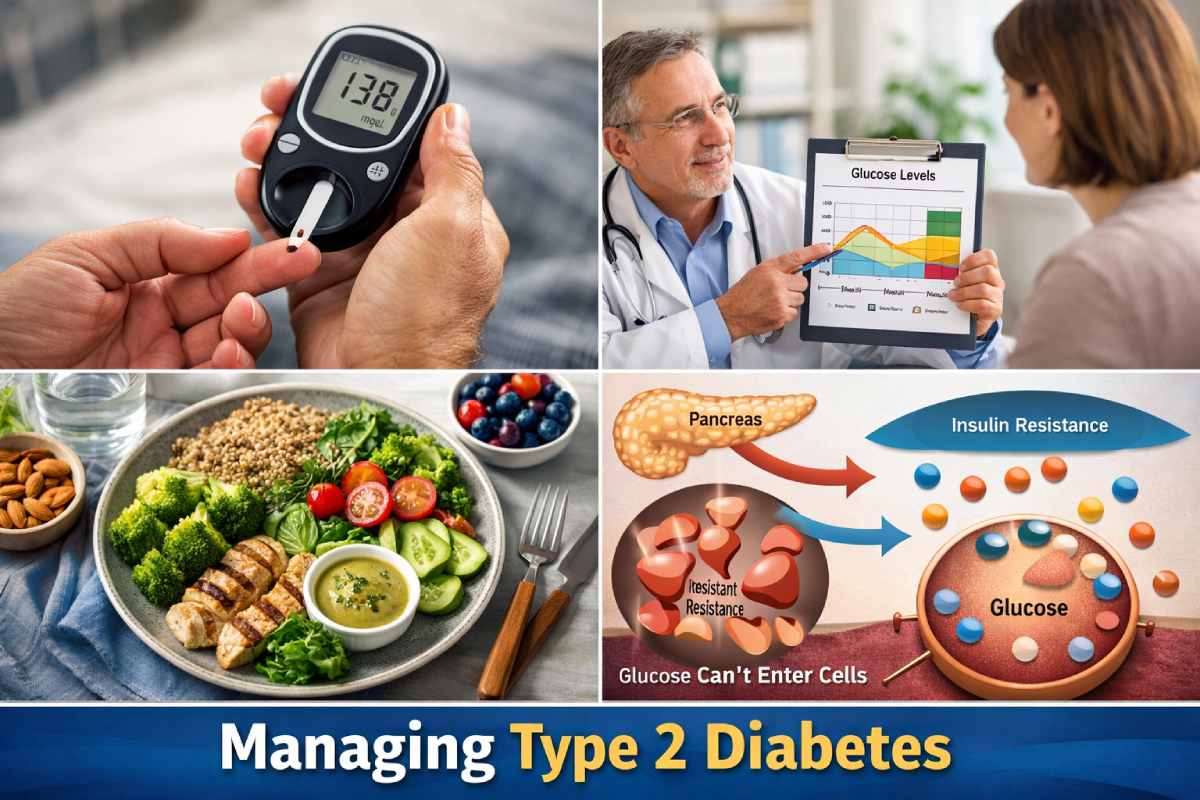
Type 2 diabetes is a long-term health condition where your body cannot properly use insulin, which leads to high blood sugar levels.
In a healthy body, insulin helps move sugar (glucose) from the blood into the cells, where it is used for energy. But in type 2 diabetes, the body either resists insulin or doesn’t make enough of it.
Because of this, sugar stays in the bloodstream instead of being used. Over time, high blood sugar can affect important organs like the heart, kidneys, eyes, and nerves if not managed properly.
According to the Centers for Disease Control and Prevention, type 2 diabetes is one of the most common chronic conditions affecting millions of people worldwide.
Type 2 Diabetes Overview
| Factor | Details |
| Condition Type | Chronic metabolic disorder |
| Main Cause | Insulin resistance |
| Affected Areas | Blood, pancreas, heart, kidneys, nerves |
| Common Age | Adults (now increasing in younger people) |
| Severity | Mild to severe |
| Management | Diet, exercise, medication, monitoring |
Early Signs of Type 2 Diabetes
Type 2 diabetes develops slowly, so many people ignore the early signs. But noticing these symptoms early can help prevent serious problems.
Common Early Symptoms
- Frequent urination
- Feeling very thirsty
- Constant hunger
- Low energy or fatigue
- Blurred vision
- Slow healing of wounds
- Tingling or numbness in hands and feet
These signs may look simple, but they should not be ignored.
Symptoms at a Glance
| Symptom | Description |
| Frequent urination | Passing urine more often than usual |
| Thirst | Feeling thirsty again and again |
| Fatigue | Feeling tired without reason |
| Blurred vision | Difficulty seeing clearly |
| Numbness | Tingling in hands or feet |
High vs Low Blood Sugar Symptoms
| Condition | Symptoms |
| High Blood Sugar | Thirst, fatigue, blurred vision |
| Low Blood Sugar | Dizziness, sweating, confusion |
Causes of Type 2 Diabetes
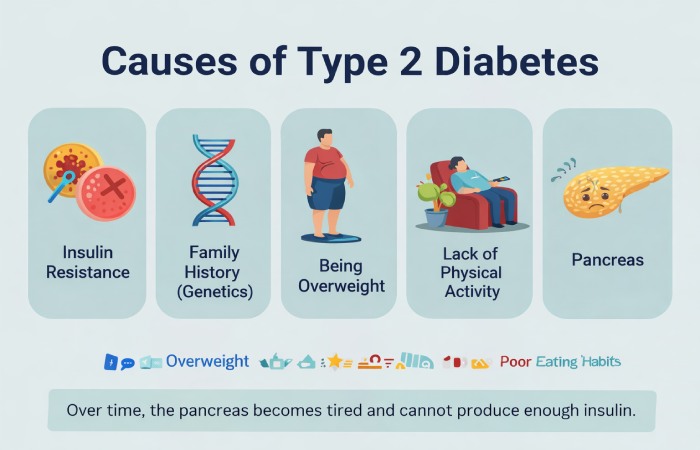
There is no single reason for type 2 diabetes. It usually develops due to a combination of lifestyle and genetic factors. Research from the National Institute of Diabetes and Digestive and Kidney Diseases shows that insulin resistance and lifestyle factors play a major role in the development of type 2 diabetes.
Main Causes:
- Insulin resistance
- Family history (genetics)
- Being overweight
- Lack of physical activity
- Poor eating habits (high sugar, processed food)
Over time, the pancreas becomes tired and cannot produce enough insulin.
Risk Factors
| Risk Factor | Impact Level |
| Family history | High |
| Obesity | High |
| Physical inactivity | High |
| Poor diet | Moderate |
| Age (40+) | Moderate |
Type 2 Diabetes Diet Plan
Diet is one of the most important parts of managing diabetes. Small food choices make a big difference.
Best Diet Plan for Type 2 Diabetes
| Food Type | Examples |
| Whole grains | Brown rice, oats, quinoa |
| Vegetables | Spinach, broccoli, carrots |
| Fruits | Apple, berries, orange |
| Protein | Eggs, fish, lentils |
| Healthy fats | Nuts, olive oil, seeds |
Foods to Avoid
- Sugary drinks
- White bread and refined carbs
- Fried foods
- Packaged snacks
You can also support your diet with gut health
Daily Routine for Managing Type 2 Diabetes
| Time | Activity |
| Morning | Check blood sugar + light walk |
| Breakfast | High-fiber, low-sugar meal |
| Afternoon | Balanced lunch + drink water |
| Evening | Exercise or walking |
| Night | Light dinner + medication (if needed) |
Treatment Options -2026 Updated
Treatment focuses on keeping blood sugar under control and preventing long-term damage.
Treatment Overview Table
| Treatment Type | Purpose |
| Lifestyle changes | Control sugar through diet and exercise |
| Medication | Improve insulin function |
| Insulin therapy | Used when body cannot produce enough insulin |
| Monitoring | Regular blood sugar tracking |
Common Medications:
- Metformin (first choice for most people)
- SGLT2 inhibitors (remove sugar through urine)
- GLP-1 receptor agonists (help with weight loss + sugar control)
- Insulin (in advanced stages)
Today, doctors focus more on personalized treatment plans.
Latest Diabetes Treatments
| Innovation | Benefit |
| Continuous glucose monitors | Real-time sugar tracking |
| GLP-1 drugs | Weight loss + better sugar control |
| AI-based monitoring | Predict sugar level changes |
| Personalized medicine | Treatment based on individual needs |
Best Exercises for Type 2 Diabetes
| Exercise Type | Benefits |
| Walking | Improves insulin sensitivity |
| Cycling | Good for heart health |
| Yoga | Reduces stress and sugar levels |
| Strength training | Improves metabolism |
Complications of Type 2 Diabetes
If not controlled, diabetes can lead to serious health issues.
Common Complications
| Complication | Affected Area |
| Heart disease | Heart |
| Kidney damage | Kidneys |
| Nerve damage | Hands & feet |
| Eye problems | Vision |
| Stroke | Brain |
Diagnosis of Type 2 Diabetes
Doctors confirm diabetes using simple blood tests.
Common Tests:
- HbA1c test (average sugar levels over 2–3 months)
- Fasting blood sugar test
- Oral glucose tolerance test
Regular testing is important, especially if you have risk factors.
Prevention Tips
You can reduce your risk by making small daily changes.
Prevention Checklist
- Maintain a healthy weight
- Exercise at least 30 minutes daily
- Eat balanced meals
- Avoid sugary and processed foods
- Get regular health checkups
Normal vs Diabetes Blood Sugar Levels
| Test Type | Normal | Prediabetes | Diabetes |
| Fasting | 70–99 mg/dL | 100–125 mg/dL | 126+ mg/dL |
| HbA1c | Below 5.7% | 5.7–6.4% | 6.5%+ |
| Post-meal | Below 140 | 140–199 | 200+ |
Type 2 Diabetes vs Type 1 Diabetes
| Feature | Type 1 | Type 2 |
| Cause | Autoimmune | Insulin resistance |
| Age | Young | Adults (now younger too) |
| Insulin | Required | Sometimes needed |
| Prevention | Not preventable | Often preventable |
Type 2 Diabetes in India
Type 2 diabetes is increasing quickly in India due to:
- Less physical activity
- Unhealthy eating habits
- Stress
- Late diagnosis
India is often called the “diabetes capital of the world”.
When to See a Doctor
See a doctor if you notice:
- Frequent urination
- Unusual tiredness
- Sudden weight loss
- Blurred vision
Early diagnosis can prevent serious complications.
Common Mistakes to Avoid
- Skipping meals
- Eating too many refined carbs
- Not exercising
- Ignoring early symptoms
- Poor sleep habits
Frequently Asked Questions (FAQs)
Can type 2 diabetes be reversed?
In early stages, lifestyle changes can help control or even reverse it.
What is the best diet?
A diet rich in fiber, whole grains, and healthy fats works best.
Is it genetic?
Yes, family history increases risk.
How fast does it develop?
It usually develops slowly over several years.
Conclusion
Type 2 diabetes is a serious condition, but it can be managed well with the right approach.
Simple steps like eating healthy, staying active, and regular checkups can make a big difference. Many people live normal and healthy lives by managing their condition properly.