
Better Nights Sleep – If insomnia has become your bed partner, it’s time to solve it. We have prepared 20 tips so that every time you get between the sheets, it is to sleep like a baby and not spin around aimlessly.
A good rest is essential to have excellent overall health and face daily with more energy. But reconciling it is not always easy, even less so in seasons that are affected by sociopolitical instability, the pandemic that has not yet been overcome, and the economic crisis looming in different areas of daily life. In addition, the time change or the rise in temperatures typical of this time of year are added to the list of causes causing sleep disturbances that should be solved. Above all, 35% of Spaniards state that they do not sleep enough, according to the “Cigna 360 Well-Being Survey”.
Table of Contents
Global Sleep Statistics
Sleep problems are not limited to one country. Research across multiple regions shows that poor sleep is becoming a global health concern.
| Region | Adults Reporting Sleep Problems | Average Sleep Hours |
| Europe | 30–40% | 6.5 hours |
| United States | 35–45% | 6.7 hours |
| Asia | 25–35% | 6.3 hours |
| Global Average | ~33% | 6.5 hours |
Health researchers recommend 7–9 hours of sleep for adults to maintain optimal physical and mental health.
Health researchers recommend 7–9 hours of sleep for adults, according to the National Sleep Foundation, to maintain optimal physical and mental health.
Several sleep studies also suggest that people sleeping less than 6 hours regularly have around 20–30% higher risk of fatigue, stress, and concentration problems.
Calm Helps You Sleep Better
“The uncertainty or change in our lifestyles brought about by the coronavirus two years ago, together with the fear of illness or isolation, generated disorders such as sadness, discouragement, apathy and affected overall health. Of people and promoting the occurrence of coronasomnia, i.e., the inability to fall asleep due to the fear of the pandemic. Although the causes of these sleep disorders are now different and socio-politically motivated, the impact on our well-being is the same and consequently influences our sleep quality,” says María Sánchez, e-Health Medical Manager at Cigna Spain.
 Again, we must remember that insomnia is one of the most common problems in Better Nights Sleep in the seasons like spring. Adapting to the new light and temperature conditions and the emergence of allergies that spring brings means that we sleep less well, are more irritable, and ultimately feel more tired and listless. As a result, not sleeping causes tiredness, exhaustion, short temper, headaches, difficulty concentrating or remembering simple things, a weakened immune system, deterioration in brain activity, and an increased risk of suffering from mental disorders.
How Stress Affects Sleep
Stress and uncertainty often disrupt the body’s natural sleep cycle.
Research from sleep health organizations suggests:
- 60% of adults report stress as a major sleep disruptor
• 45% say work pressure affects their sleep quality
• 30% experience insomnia symptoms during stressful periods
When the brain stays alert due to worry or anxiety, the body struggles to produce enough melatonin, the hormone responsible for regulating sleep cycles.
This is why relaxation practices like breathing exercises, meditation, and light stretching before bed can improve sleep quality.
Sleep Tips: 12 Tips to Better Sleep
Better Nights Sleep – The factors that can interfere with a good night’s sleep, from work stress and family commitments to illness. It’s no wonder that good sleep can sometimes be elusive.
You may not be able to control the factors affecting your sleep. However, you can adopt habits that promote better sleep. Get started with these simple tips.
Recommended Sleep Duration by Age
Different age groups require different amounts of sleep for proper body function.
| Age Group | Recommended Sleep Time |
| Teenagers (14–17) | 8–10 hours |
| Adults (18–64) | 7–9 hours |
| Older Adults (65+) | 7–8 hours |
People who consistently sleep less than the recommended amount may experience:
- reduced concentration
• lower immunity
• higher stress levels
• reduced productivity
Maintaining a consistent sleep routine helps regulate the body’s internal clock.
1. Heating
It should be between 15 and 20 ° C, ideal for helping the body relax before falling asleep.
2. Follow a plan
Try to wake up at the same time constantly. Following a regular schedule makes it easier to fall asleep since, in this way, your body will get into a routine that will make it easier for it not to be upset or disconcerted by sudden changes in hours.
3. Exercise
A scientific study revealed that seven in the morning is the best time to do resistance training if you want a good night’s sleep. So try to go to the gym as soon as you wake up.
4. Stretch
You can also start the day by practising yoga. It will free you from anxiety and bad feelings, enemies of tranquillity that can cause insomnia.
5. Meditate
Meditation will also help raise melatonin levels in your brain, making it easier for you to sleep soundly later.
6. Sunbathe
If you leave home to go to work and it is still night, try to sunbathe at noon. Lack of sunlight muddles your circadian rhythms, making it much harder for you to sleep
7. Go out into the field
A brief foray into nature can help you fall asleep. It is also helpful to walk through a park because we are looking to “tire” the body so that you take the bed with desire.
8. Pillow
Better a little hard because with soft ones, there is more risk of discomfort and, consequently, worse sleep.
9. Light dining
The more copious it is, and the later you eat dinner, the more your circadian rhythm will be disturbed. So a light dinner at a regular time will help digestion not be a problem to fall asleep.
10. No carbohydrates
A carbohydrate-rich dinner may make you sleepy, but your sleep will be less restful. These are the foods richest in carbohydrates.
11. Take a bath
With hot water 90 minutes before bed, leave the body relaxed and ready to sleep.
12. A glass
Taking a shot of alcohol increases levels of adenosine, which induces sleep. But drinking in excess has the opposite effect, so don’t overdo it if you opt for this trick that you can apply occasionally.
Natural Sleep Aids vs Lifestyle Habits
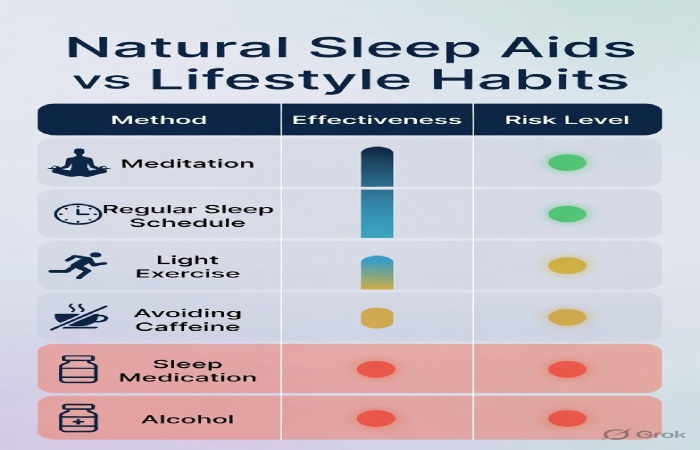
| Method | Effectiveness | Risk Level | Long-Term Benefit |
| Meditation | Medium | Very Low | High |
| Regular Sleep Schedule | High | None | High |
| Light Exercise | Medium | Low | High |
| Alcohol | Temporary | Medium | Low |
| Sleep Medication | High | High | Short-term |
Lifestyle changes usually provide long-term improvements, while temporary methods may only provide short relief
Simple Habits That Improve Sleep Quality
Small daily habits can significantly improve sleep quality over time.
Common healthy sleep habits include:
- keeping a consistent bedtime schedule
• limiting screen exposure before sleep
• avoiding heavy meals late at night
• maintaining a quiet sleeping environment
• reducing caffeine intake in the evening
Sleep specialists often suggest that improving daily habits can increase sleep quality by up to 25–40% over time.
A well-rested body supports better concentration, stronger immunity, and improved overall well-being.