
Table of Contents
Introduction
Gut health is not just about digestion.
It affects your energy, immunity, mood, skin, weight, and even brain health.
Many people think digestion simply means breaking down food. But your gut does much more than that. It controls how nutrients are absorbed. It protects you from harmful bacteria. It even communicates with your brain.
If your gut is healthy, your whole body works better.
If your gut is weak, you may experience:
- Bloating
- Gas
- Constipation
- Acidity
- Skin problems
- Low immunity
- Fatigue
- Mood swings
In this guide, you will learn everything about gut health in simple words.
What Is Gut Health?
Gut health means how well your digestive system works and how balanced your gut bacteria are.
Your digestive system includes:
-
Mouth
-
Esophagus
-
Stomach
-
Small intestine
-
Large intestine
-
Colon
Inside your intestines, trillions of bacteria live. This community is called the gut microbiome.
Some bacteria are good.
Some bacteria are harmful.
When good bacteria are stronger and balanced, your gut stays healthy.
When harmful bacteria grow more, problems begin.
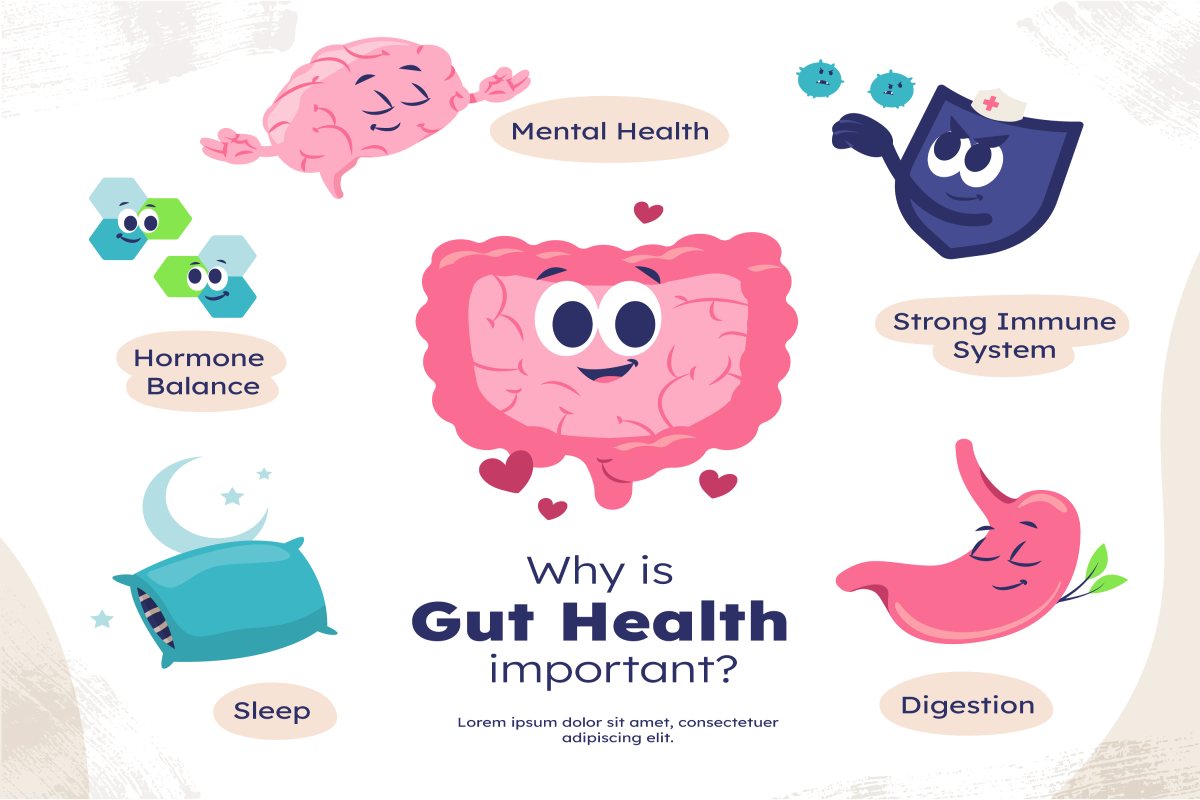
Why Gut Health Is Important
Your gut affects more than digestion.
| Body Function | How Gut Affects It |
|---|---|
| Immunity | 70% of immune cells live in the gut |
| Brain | Gut produces serotonin (happy hormone) |
| Skin | Poor gut may trigger acne and eczema |
| Weight | Gut bacteria influence fat storage |
| Energy | Poor digestion reduces nutrient absorption |
Gut and Immunity
About 70% of your immune system is located in your gut.
If gut bacteria are balanced:
- You get sick less often
- You recover faster
If gut bacteria are weak:
- Frequent infections
- Allergies
- Inflammation
A strong gut acts like a protective shield.
Gut and Brain (Gut-Brain Connection)
There is something called the gut-brain axis.
Your gut and brain communicate through nerves and hormones.
If your gut is unhealthy:
-
Anxiety may increase
-
Mood swings may happen
-
Brain fog can appear
When your gut improves, mental clarity often improves too.
How Digestion Works
Digestion happens step by step.
Step 1: Mouth
You chew food. Saliva starts breaking it down.
Step 2: Stomach
Stomach acid breaks food further and kills harmful bacteria.
Step 3: Small Intestine
Nutrients are absorbed into the bloodstream.
Step 4: Large Intestine
Water is absorbed. Good bacteria ferment fiber. Waste is formed.
Digestion Process Table
| Organ | Main Function | Time Spent |
|---|---|---|
| Mouth | Breaks food | Seconds |
| Stomach | Acid breakdown | 2–4 hours |
| Small Intestine | Nutrient absorption | 4–6 hours |
| Large Intestine | Water absorption & bacteria action | 12–48 hours |
Signs of Poor Gut Health
Many people ignore early signs.
Common symptoms include:
- Frequent bloating
- Gas
- Constipation
- Diarrhea
- Bad breath
- Skin breakouts
- Sugar cravings
- Weak immunity
- Chronic fatigue
These signs mean your gut balance may be disturbed.
Healthy Gut vs Unhealthy Gut
| Factor | Healthy Gut | Unhealthy Gut |
|---|---|---|
| Good Bacteria | 80–85% | 40–50% |
| Inflammation | Low | High |
| Nutrient Absorption | Efficient | Reduced |
| Energy Stability | Stable | Fluctuating |
| Infection Resistance | Strong | Weak |
Main Causes of Poor Gut Health
Gut problems develop slowly due to daily habits.
Lifestyle Causes
- Low fiber diet
- Too much sugar
- Processed foods
- Chronic stress
- Poor sleep
- Lack of exercise
- Dehydration
Medical Causes
-
Frequent antibiotics
-
Painkiller overuse
-
Infections
-
Alcohol overuse
-
Food intolerances
Most gut damage is reversible with consistent lifestyle changes.
How to Restore Gut Health Naturally
Gut healing takes time. It doesn’t happen in one day.
Here are simple steps:
• Increase fiber slowly
• Add probiotic foods daily
• Reduce sugar gradually
• Drink enough water
• Manage stress
• Sleep properly
• Avoid unnecessary antibiotics
Best Foods for Gut Health
Probiotic Foods (Add Good Bacteria)
- Yogurt
- Kefir
- Sauerkraut
- Kimchi
- Buttermilk
Prebiotic Foods (Feed Good Bacteria)
- Garlic
- Onion
- Banana
- Oats
- Apples
Fiber and Gut Health
Fiber is extremely important.
| Type | Function | Found In |
|---|---|---|
| Soluble Fiber | Feeds bacteria | Oats, fruits |
| Insoluble Fiber | Adds bulk | Whole grains, vegetables |
Adults should aim for 25–35 grams daily.
If you would like a more detailed explanation of Best Foods for Gut Health, we have created a separate article that explains each food and its benefits step by step.
Worst Foods for Gut Health
Foods That Harm Gut Health
Highly processed foods
Refined sugar
Excess alcohol
Artificial sweeteners
Deep-fried foods
Carbonated drinks
You can add a small comparison table:
| Good for Gut | Harmful for Gut |
|---|---|
| Yogurt | Sugary drinks |
| Oats | White bread |
| Fruits | Candy |
| Vegetables | Processed snacks |
Daily Gut-Friendly Routine
Morning:
- Warm water
- Fiber-rich breakfast
- Yogurt
Afternoon:
- Salad
- Whole grains
Evening:
- Light dinner
- Avoid heavy sugar
Night:
-
7–8 hours sleep
Small daily habits create long-term gut health.