
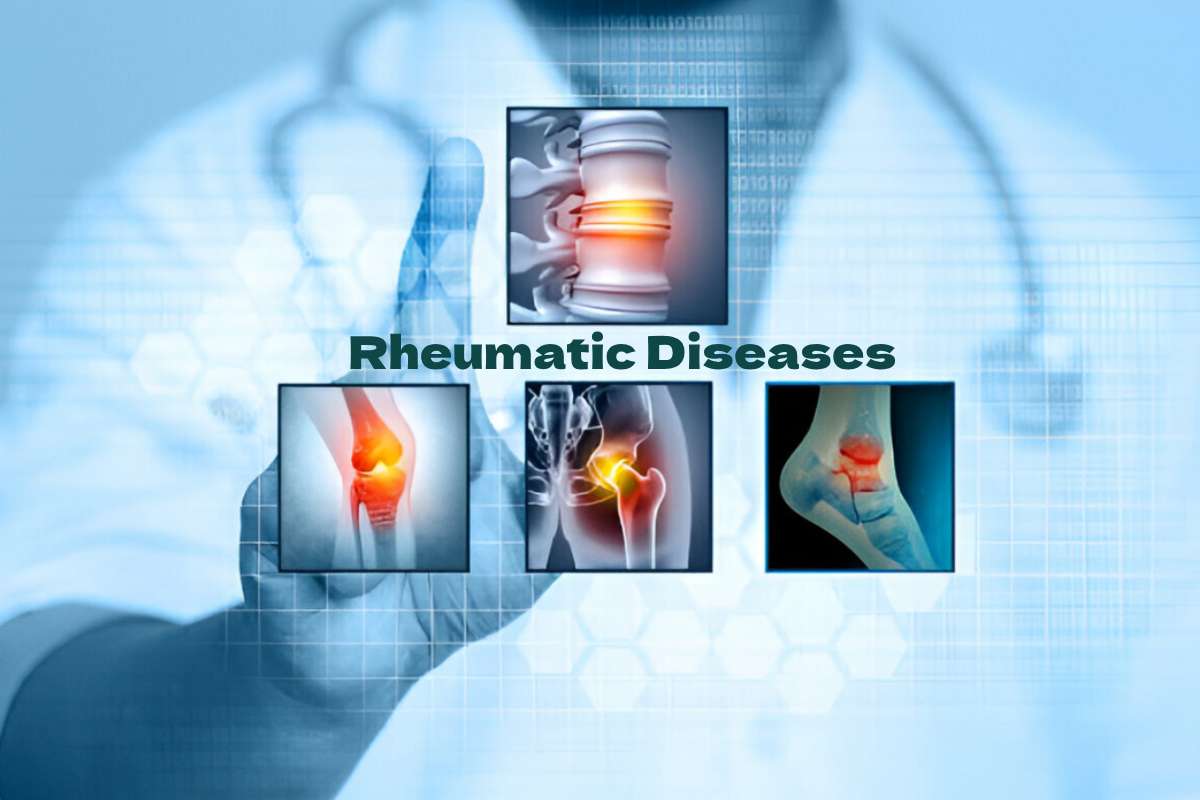
Rheumatic diseases are a group of conditions that can affect joints, muscles, and even internal organs. Many of these diseases are linked to inflammation and problems with the immune system.
They are not just about pain. These conditions can affect people of all ages and may vary from mild discomfort to serious health complications.
In this article, we will look at the most common types of rheumatic diseases, along with their symptoms and causes.
Table of Contents
Rheumatic Diseases: What are They?
There are known to be over 100 rheumatic illnesses. In the US, there are 54 million adult cases of rheumatoid arthritis and 300,000 pediatric cases.
Inflammation, tissue deterioration, and autoimmune dysfunction can all be brought on by rheumatic disorders. Your immune system incorrectly targets healthy tissues when you have autoimmune diseases.
Rheumatic diseases frequently impact the following musculoskeletal system components:
- Joints
- Muscles
- Bones
- Ligaments and tendons
Immune disorders that damage important organs are also included in rheumatic illnesses and the medical speciality of rheumatology.
What Signs are most Typical?
Rheumatoid arthritis symptoms can include some of the following:
- Aches and pains
- Bulge
- Stiffness or limited range of motion
- Feeling tired or exhausted
- General malaise or feeling unwell
- Heat
- Weight loss
Rheumatic Disease can affect different body parts and have unusual symptoms.
Common Autoimmune and Inflammatory Joint Diseases
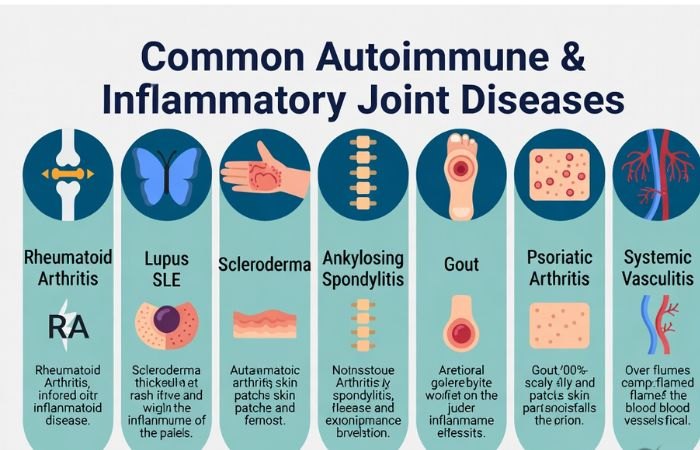
Rheumatoid Arthritis
- Rheumatoid arthritis (RA) is a condition where the immune system mistakenly attacks the joints instead of protecting the body. It usually affects multiple joints, especially the hands, wrists, and knees.
- This can lead to pain, swelling, and stiffness. Over time, it may damage the joints and affect movement, sometimes even changing their shape. These symptoms are similar to other conditions like psoriatic arthritis and shoulder pain, which also affect joint function.
- Symptoms often come and go. During flare-ups, pain and swelling increase, while in remission, they may reduce or disappear for a while.
- RA is not limited to joints. It can also affect other parts of the body like the eyes, lungs, heart, and blood, sometimes causing fatigue or anaemia.
Lupus
Lupus is a chronic autoimmune disease that cause inflammation throughout the body. In this Disease, your immune system is responsible for attacking and affecting organs and tissues such as:
- Joints
- Heart
- Skin
- Kidneys
- Brain
- Some blood
- Liver
- Lungs
- Hair
- Eyes
It can lead to inflammation, and pain and sometimes damage organs, joints, and tissues.
Lupus can be a severe and sometimes fatal disease. However, many people with Lupus have a mild form.
Scleroderma
Scleroderma usually causes skin inflammation and connective tissues of joints and organs. However, sometimes a person may experience hardening in the organs and tissues of the joints without external skin symptoms.
Scleroderma is caused by an overrun of collagen, a protein that causes it to accumulate in the body.
Doctors classify Scleroderma as localized cutaneous Scleroderma or diffuse cutaneous Scleroderma. Localized cutaneous Scleroderma usually affects the skin of the hands, neck, knees, and elbows. It does not affect a person’s torso, arms, or legs.
Diffuse Scleroderma occurs over large areas of the body and can lead to severe complications in the respiratory and cardiac systems.
People with Scleroderma may experience movement restrictions due to the thickening and thickening of the skin. The skin can also appear shiny because it is very dense.
Ankylosing Spondylitis
Ankylosing spondylitis (AS) – An inflammatory type of arthritis that moves the spine and can cause long-term stiffness. In severe cases, It is more common in men than women.
In addition to pain and stiffness in the lower back and pelvis, AS can cause inflammation in other large joints such as the hips, shoulders, and ribs. The leading indicator of the lesion is inflammation of the sacroiliac joints. They connect the pelvis to the lower spine.
In more severe cases, AS inflammation can lead to new bone formation in the spine, resulting in stiffness and decreased range of motion. In addition, inflammation and pain in the eyes may also occur.
For more details, you can read our full guide on ankylosing spondylitis.
Gout
Gout occurs when uric acid builds up in the body. Too much uric acid can form crystals in certain body parts, especially the skin and joints. The accumulation of uric acid in gout can also contribute to systemic inflammation and metabolic syndrome.
People with gout experience joint pains, redness, and swelling. It most frequently affects the big toe but can also affect other joints.
Psoriatic Arthritis
Psoriatic arthritis affects some people who have psoriasis, a skin condition that causes red, scaly patches. It usually develops a few years after skin symptoms appear.
This condition causes joint pain, stiffness, and swelling. In some cases, it can also affect nails and cause fatigue.
The exact cause is not fully known, but it is linked to immune system dysfunction.
Example:
This condition is often linked with psoriasis, a skin disorder.
Systemic Vasculitis
Vasculitis is a condition characterized by inflammation of the walls of blood vessels. There are four main subtypes of vasculitis.
ANCA-associated vasculitis: This vasculitis affects small to medium-sized blood vessels and can affect multiple organs.
GCA and Takayasu’s arteritis: This vasculitis usually affects medium to large blood vessels.
The inflammation caused by vasculitis can cause the walls of blood vessels to narrow, which in turn can restrict blood flow. When certain tissues in your body do not receive enough blood, tissue death can result. In addition, many types of vasculitis are associated with joint and muscle pain.
What are the Risk Factors?
Genetic factors play a vital role in many rheumatic diseases, and having a family history of the disease often puts you at higher risk.
Other factors may increase the risk of developing rheumatic Disease.
- Age
- The risk increases with age in certain conditions such as rheumatoid arthritis and polymyalgia rheumatic. Other conditions are more communal between early adulthood and middle age. This includes:
- lupus
- scleroderma
- psoriatic arthritis
- Sex
Impact of Infection
- Exposure to infection is believed to influence the development of certain rheumatic diseases, such as:
- lupus
- scleroderma
- polymyalgia rheumatica
Basic Conditions
High blood pressure, diabetes, obesity, early menopause, and kidney disease can increase your risk of developing gout.
In addition, having a rheumatic disease such as rheumatoid arthritis, Lupus, or Scleroderma can put you at risk of developing other conditions, such as Sjögren’s syndrome or vasculitis.
Why is Early Care Necessary?
It is important to consult your doctor if you have symptoms consistent with rheumatic Disease. In many cases, early diagnosis can prevent the worsening of the condition or more severe symptoms.
Rheumatic diseases can lead to further damage to joints and other tissues without proper treatment.
Latest Updates in Rheumatic Diseases
Recent medical research has significantly improved the understanding and treatment of rheumatic diseases. These conditions are now better managed due to advancements in early diagnosis and targeted therapies.
Studies from organizations like World Health Organization and Centers for Disease Control and Prevention show that rheumatic diseases are increasing globally due to aging populations, sedentary lifestyles, and rising autoimmune conditions.
Key Latest Insights:
- Early diagnosis using AI-based imaging tools is improving accuracy
- New biologic drugs are reducing inflammation more effectively
- Research shows a strong link between gut health and autoimmune diseases
- Lifestyle factors like stress, diet, and sleep play a major role
Latest Treatment Options for Rheumatic Diseases
Treatment for rheumatic diseases has evolved beyond traditional pain management. Today, doctors focus on controlling the immune system and preventing long-term damage.
Modern Treatments Include:
- Biologic Drugs
These target specific parts of the immune system and are widely used for rheumatoid arthritis and lupus. - JAK Inhibitors
A newer class of medication that blocks inflammation pathways. - Physical Therapy
Helps maintain joint flexibility and reduce stiffness. - Anti-inflammatory Diet
Foods rich in omega-3, antioxidants, and vitamins help reduce symptoms. - Personalized Treatment Plans
Doctors now tailor treatments based on individual patient conditions.
Rheumatic Diseases in India
Rheumatic diseases are becoming increasingly common in India due to lifestyle changes and lack of early diagnosis.
According to Indian Council of Medical Research, arthritis and autoimmune diseases are rising, especially in urban populations.
Common Reasons in India:
- Vitamin D deficiency
- Sedentary lifestyle
- Poor diet habits
- Delayed diagnosis
Early consultation with a rheumatologist is still low in India, which leads to complications.
When Should You See a Doctor?
You should consult a doctor if you notice:
- Joint pain lasting more than 2 weeks
- Morning stiffness
- Swelling in joints
- Unexplained fatigue
- Recurring fever with joint pain
Early medical care can prevent permanent joint damage and improve quality of life.
Comparison of Common Rheumatic Diseases
| Disease | Type | Main Cause | Affected Area | Key Symptom |
| Rheumatoid Arthritis | Autoimmune | Immune system attack | Joints | Pain, swelling |
| Lupus | Autoimmune | Immune dysfunction | Multiple organs | Fatigue, rash |
| Scleroderma | Autoimmune | Excess collagen | Skin & organs | Skin thickening |
| Ankylosing Spondylitis | Inflammatory | Unknown (genetic link) | Spine | Back stiffness |
| Gout | Metabolic | Uric acid buildup | Joints (toe) | Sudden pain |
| Psoriatic Arthritis | Autoimmune | Linked to psoriasis | Joints & skin | Joint pain + skin patches |
Symptoms & When to See Doctor
Common Symptoms and Action Guide
| Symptom | Possible Condition | Severity Level | When to Act |
| Joint pain & swelling | Rheumatoid arthritis | Moderate to severe | If lasts >2 weeks |
| Lower back stiffness | Ankylosing spondylitis | Chronic | Morning stiffness daily |
| Sudden severe toe pain | Gout | Acute | Immediate consultation |
| Skin thickening | Scleroderma | Serious | Early diagnosis needed |
| Fatigue + rash | Lupus | Variable | If recurring symptoms |
| Joint pain with psoriasis | Psoriatic arthritis | Moderate | Early treatment required |
Below are some common questions people often ask about rheumatic diseases.
Frequently Asked Questions (FAQs)
What is the most common rheumatic disease?
The most common rheumatic disease is rheumatoid arthritis, affecting millions worldwide.
Are rheumatic diseases curable?
Most rheumatic diseases are not fully curable, but they can be effectively managed with proper treatment.
Can young people get rheumatic diseases?
Yes, some conditions like lupus and juvenile arthritis can affect young individuals.
Which doctor treats rheumatic diseases?
A specialist called a rheumatologist treats these conditions.
Conclusion
Rheumatic diseases are complex conditions that go beyond simple joint pain. They can affect different parts of the body, including organs, muscles, and the immune system.
Early diagnosis and proper treatment play a key role in managing these diseases and preventing complications. With modern treatments and better awareness, many people are now able to live a better and more active life.
If you notice ongoing joint pain, stiffness, or unusual symptoms, it is always a good idea to consult a doctor early.